HIYA! MOM L HERE!!
This is a blog hop for all pet bloggers interested in participating in Blog The Change 4 Animals.

I pawticipate
A month ago I had the privilege to visit one of the most successful TNR (trap, neuter, return) programs in the San Francisco Bay area. The program is Project Bay Cats and they can be found on Face Book. I learned what it takes to create a well managed community cat (aka feral) colony and I saw first hand what real successful targeted TNR looks like. The caretaker who met me to introduce me to some of their cats actually apologized because she was concerned we might not see very many cats!!
And we didn’t!! Here is how you take a community cat colony from the size of approximately 175 cats to one that is only 30! Did it take time, of course it did! It took from the inception of Project Bay Cats in 2004 until now to reduce this large colony to only 30 cats. Here is how it’s done.
Tip One: Find a bunch of community cats with no care givers
So, maybe you are out for a nice Saturday afternoon kite board sail on San Francisco Bay. Likely you will first notice some apparent “stray” cats or cats with homes who are left to wander outside. You’ll think they all go “home” at night and are safe, fed, cared for including spay and neuter.

Cats roaming and head butting each other in the early days
Then, you notice KITTENS!—lots and lots of them. And now you become concerned about the cats and kittens, wondering if they are really “feral” cats and no one is caring for them. No one is feeding them, making sure they are all spayed and neutered and have their medical needs met.
A TNR program is started. Cimeron Morrissey found this feral colony living on the edge of the San Francisco Bay near a walking, biking path. They were living in the shadow of the high fennel plants and on the edge of a whole community who paid no attention to them at all.
I only saw about six to seven cats at the three feeding stations we visited. At the first station there is only one cat, Nadine. She was shy with me but she did come out after I left.
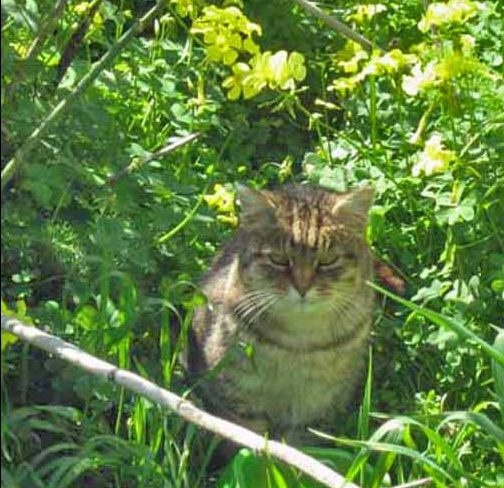
Always shy, she does have a cat who dines with her. Yes, he is neutered
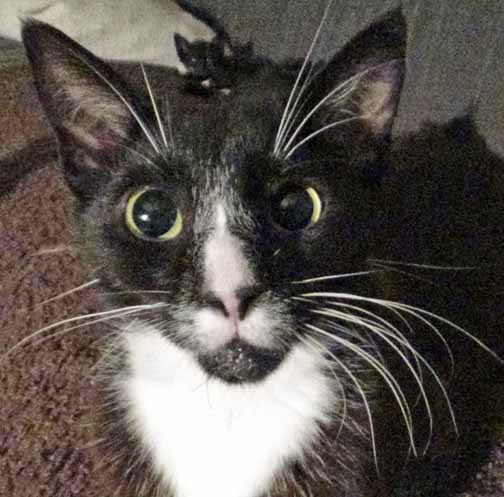
Then we visited Bat and Twinkletoes. It’s looking like Bat is next up for adoption!! So exciting. And likely Twinkletoes won’t be far behind. (captions show when you hover on photo)

Hey guys, I am ready for my forever home!!

Twinkletoe

Bat getting his pets
At the third station we were greeted by a very hungry cat. And as with all cats, clearly she had expectations to be dining sooner that later. She showed up to make sure we knew just where to go, she was our GOOGLE MAP app for this feeding stations!

Over here! I’ve been waiting!!
And then she went into her Google voice—”stay straight up this steep incline, take the right turn at the top…in another 15 feet you will be at your destination”.
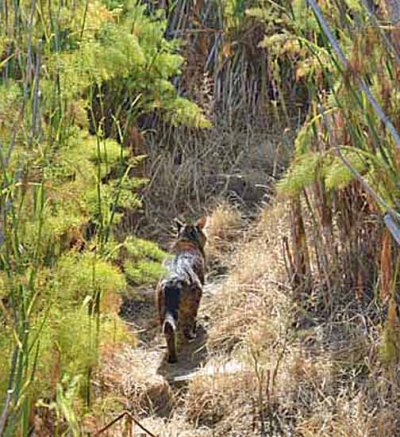
I have to do everything for you guys!
Sadly, I had to depart before hitting the fourth feeding station. But here are the two “Dancing Black Cats” who are there to entertain all their caregivers.
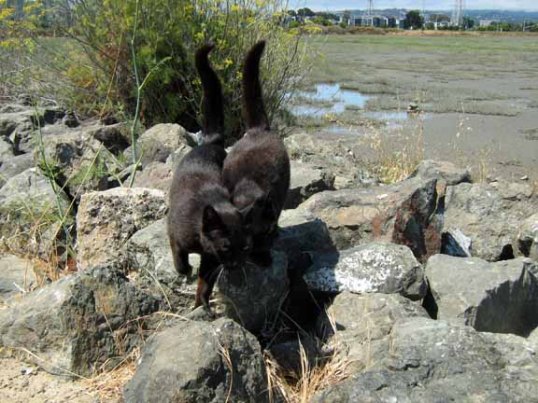
I love you—I love you more—I love you to the moon and back
Tip Two: Invite others to partner with you in managing this colony
Eventually Ms Morrissey was able to find a partnership with an existing cat rescue group, Homeless Cat Network. And in a ground breaking move, the two were able to gain the support from the municipality in which the Project Bay Cats live. That support it ongoing to this day, twelve years later. The city had signs made and posted all along the several mile stretch of the waking, biking path to let the public know what was going on.

Homeless Cat Network does supply most of the food and necessary supplies, and some volunteers purchase their own as well as receiving food and supply donations from the multitude of Face Book supporters. But the most critical partnerships were those established with two veterinary clinics. These colony cats are not only all spayed and neutered (compliments of the two clinics), they continue to receive ongoing vet care when needed.
Tip Three: Get yourself some dedicated volunteers
Those who care for and feed this colony, many of them for the last twelve years, are so dedicated and it shows. Their job is not easy. Heavy containers of food, water, cleaning supplies and even large hedge clippers if the brush and Fennel need to be cut around the feeding stations and shelters. They have even had to build a bridge when the water bog kept them from getting to a feeding station.

The bridge; All cats are gone from this station

That cart is very HEAVY

have to control flies and wasps
Rain or shine, the food has to be delivered and the cats checked for health concerns.

Ant protected dry food

All must be sanitized every day

Trunk loaded with supplies
Tip Four: Build proper feeding stations and housing
The feeding stations must be built to avoid as many extraneous visitors as possible. They are built about two feet off the ground as skunks are not suppose to jump. Of course there are always those rascals, the raccoon family, who can jump for sure. The housing is to protect the cats from inclement weather as well as provide them a simple respite from other cats to take naps, sleep and dream of a day when they will be able to have their very own home.

tradional feeding station

Some just want to eat on the ground

Others want to eat on the rocks
The shelters can be creative, as long as they can withstand weather.

Camouflage

front and back doors

Cabin
Tip Five: Be patient. Think about the impossibility of socializing community cats
It was astonishing to me to learn that many of these cats, over the years, became so socialized just by the ever present caregivers, that they would not only allow pets, but actually come to live in homes. My concept of cats being unadoptable was shattered. Nothing can withstand the constancy of caring attention, ongoing medical care and the ability to sense and feel a safe living environment.
Project Bay Cats IS the change for all 175 cats. TNR works, and yes, it takes time—but isn’t that what change is all about?
Hope you stuck around long enough for this incredible video—demonstrating the before and after of Project Bay Cats.
Please allow time for the following link to cycle through to Face Book. Permission to use this video was granted to Savannah’s Paw Tracks by the author, Cimeron Morrissey.
PAW PATS, MOM LINDA
PeeEss—Bat, the black girl with the white spot on her chest at the second station is now AVAILABLE FOR ADOPTION!! PLEASE SHARE!
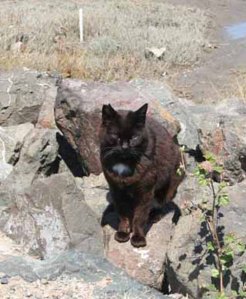
Hey guys, I’m ready for my forever home!!














 Savannah's Paw Tracks