
Here a SNIP, There a SNIP, Everywhere a SNIP SNIP!
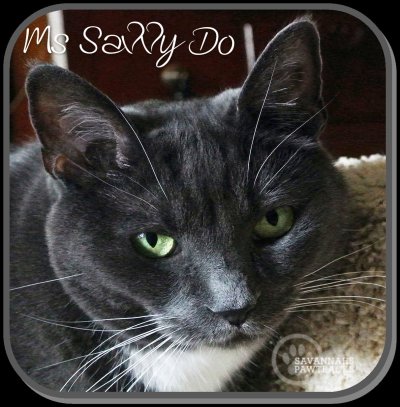
HIYA!! SAVANNAH HERE!!!
If you and your community are not gettin’ it goin’ with some SNIP SNIP, then you might want to have a look at this post. Anyone new to my bloggy may not know about how proud I am of my Mom L and Dad P for their volunteering four times a year for our county’s SNIP CLINIC—Spay, Neuter Impact Program. This is an all volunteer clinic, including DVMs (vet docs) RVTs (licensed vet techs), full catered food service by many of our volunteers who also take up stations during the clinic. Our county animal services department allows SNIP to utilize parts of their shelter including the surgery, on four Sundays a year when the shelter is closed. SNIP brings in all its own medical supplies and some medical equipment as well as supplies for the bathrooms and such! All done through generous donations from these very same volunteers and others in our county. Oh and did I mention that most of the DVMs and RVTs come from outside our county, from all parts of the San Francisco Bay Area?
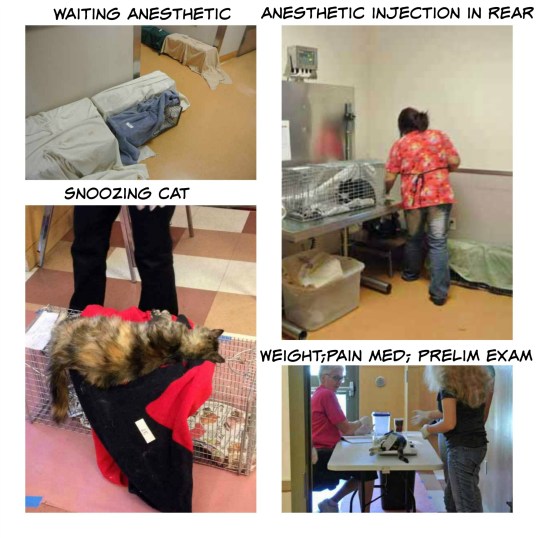
This spay/neuter clinic is exclusive for community cats brought in by either private citizens or cat rescue groups who do TNR (trap, neuter, return). The cost of spay/neuter is $15USD and all the cats get a good physical check up while they are sedated, including but not limited to: vaccinations, wound cleaning, mani/pedi if needed for health, ear mite treatment, flea treatment, antibiotics if the cat has an infected wound, pain medication to help them recover. All cats are recovered to a fully awake status onsite at the clinic and then their caretakers pick them up and take them back for complete recovery at their homes before returning them back to their community homes or cat colonies.
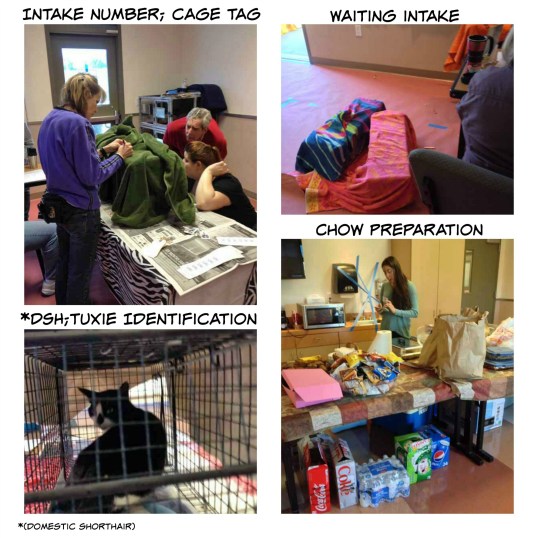
The cats and their caretakers/transporters arrive and present themselves to one of two admission stations. They all have reservations so SNIP can plan ahead for staffing and supplies, etc. Mom L does the admission for the cat rescue groups. They check in with their cats in traps waiting to be processed.
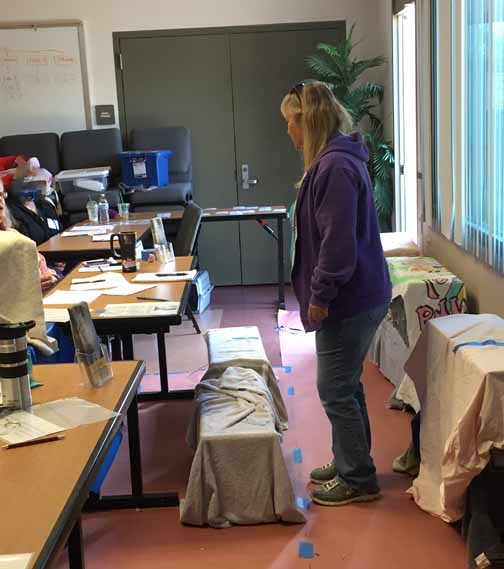
Each cat trap, with cat inside, is lifted onto the admission check in table where one person identifies the cats color/breed and the other person writes it down on the cat’s “toe tag” which will remain attached to the cat’s trap, or the cat itself once sedated. The trap is tagged with a number, the cat’s trap cover has the same number attached and that “toe tag” is never separated from any cat during the whole process. This enables SNIP to ensure that each cat is returned to its very own trap after surgery and then returned to its caretaker.

Oh hey, did I tell you about what happens to the cat’s trap while they are prepped for surgery and then go through surgery??? That trap gets all cleaned up! The cats are returned to sanitized traps, with fresh paper for them to recover. They are also placed on warmers after surgery to ensure they don’t get cold. Not bad, right?

Dad P serves in the morning as an Admit Transporter meaning he transports the newly admitted cat to the area where it will receive its sedation injection.
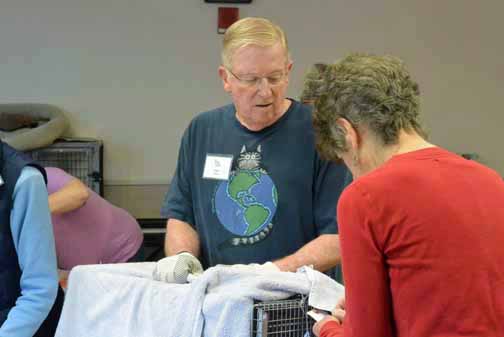
The male cats don’t take much time for these experienced Vets to neuter them—like maybe 3-5 minutes!! So most of the vets spend their time in the surgery doing female cat spays. This past SNIP Clinic saw approximately eighty four cats come through and many of the females were already pregnant. So begins my county’s “kitten season”. When kittens are aborted the community cat population can be actively diminished by literally hundreds of cats. An average cat has 1-8 kittens per litter and 2-3 litters per year. During her productive life, one female cat could have more than 100 kittens. A single pair of cats and their kittens can produce as many as 420,000 kittens in just 7 years. Now you do the math and figure how many cats will be added to a community cat population if one female is allowed to birth her kittens and then all her kittens, not neutered and not spayed , start to reproduce within six months or less from their own birth.

So many of the community cats Mom L and Dad P see every SNIP Clinic are beautiful cats. So unfortunate they did not have the care they deserved early in life such as spay/neuter and proper vaccinations.
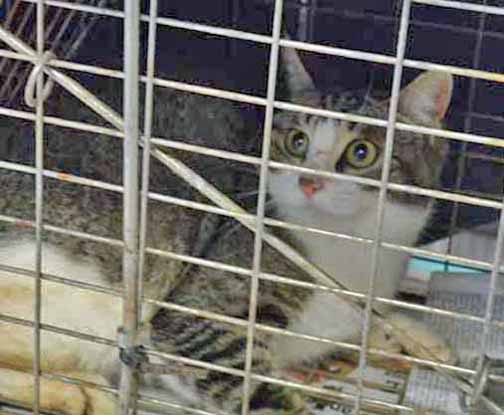
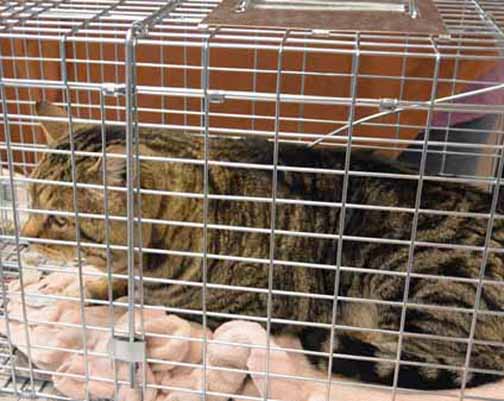
Let me introduce you to some of the cats Mom L was able to capture during the April 2017 SNIP Clinic. You can read the captions I added if you simply hover your “mousie” over each photo. Hope you enjoy my added captions.


This last clinic saw a large number of Siamese.


One sweet, not completely feral, ladycat caught Mom L’s eye.


So many community cats, so few humans who care enough to simply ask for the resources that are available in communities across the USA—many low cost or now cost—
SPAY/NEUTER ALL YOUR COMPANION ANIMALS
KEEP THEM SAFE AND STOP THE OVER POPULATION OF UNWANTED COMPANION ANIMALS
PURRLEASE DO NOT LEAVE WITHOUT VIEWING THIS SLIDESHOW















 Savannah's Paw Tracks