
Feline Investigation: The Making of a Feline Express™ Driver #Returntofield
Hello All! Mom Linda Here!
If I give you 5 seconds to cite 2 things you know about the Return To Field (RTF) program, what would you say? Could you answer me?
How about if I give you that same 5 seconds to cite the difference between Trap, Neuter Return (TNR) and RTF, could you do that? What is the difference?
Now if you have been following Savannah’s Paw Tracks for 2016, then you might know at least one response to each. Savannah wrote about RTF for her January 2016 Be The Change 4 Animals post.
For the time being, let me provide 2 things in response to my first request—”cite 2 things you know about the Return To Field (RTF) program.” #ReturntoField
- It reduces shelter overcrowding by getting the community cats out of the shelter within 3 days.
- It immediately reduces euthanasia rates in shelters.
And here are a couple of responses to my second request—”cite the difference between Trap, Neuter Return (TNR) and RTF.”
- RTF is strictly dependent on a partnership between a public kill shelter and a local 501 c3 transfer partner rescue.
- RTF does not require the shelter or the transfer partner to trap the cats, they are community cats trapped and brought to the shelter by the public.
I started this article with both of those requests because before I started to work with Outcast Cat Help (OCH) , my county shelter’s 501 c3 transfer partner for RTF, I know I could not have responded to either of my own requests in 5 seconds.
My story is about the making of an Outcast Cat Help Feline Express ™ Driver—me. I know that Savannah has been investigating my whereabouts lately. She has been concerned as I come home smelling of not only other cats, but smelling like the public shelter where she was left in the night drop box. She was alone and terrified with no information about her other than she was a stray. So she has a reason for her concern about what I have been doing and where it takes me.

uh oh—this car is parked in front of my old residence
I have been holding off telling her about what I have chosen for our next Paw It Forward Project.

This is worrisome—we need a chat
My training is almost over and soon I will be picking up community cats from the shelter—spayed, neutered, rabies and FVRCP vaccinated and treated for fleas, ear mites, etc. with Revolution and ready to go home to their old ‘hood. I provide them with the last stage of their round trip ticket.

The RTF program in the USA, growing as part of the Million Cat Challenge, is a positive approach for a community to manage the care and treatment of its community cats.
Outcast Cat Help cites six possible paths to dealing with community cats—
- Do nothing
- Humanely trap the cat and bring it to a shelter
- TNR
- Humanely deter the cat from personal property
- If the cat is slightly friendly, rehome it
- Trap the cat, spay/neuter and find a safe place to relocate it such as a barn, warehouse area etc. where it will be fed and watched over
Which of those six possible paths has your own community chosen to follow—whether by intention or through simple lack of planning and action?
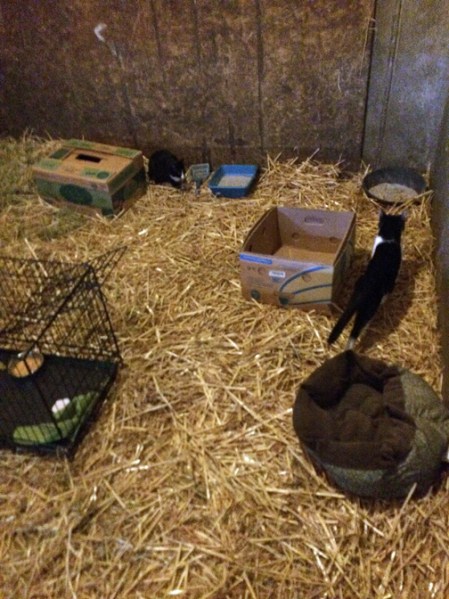
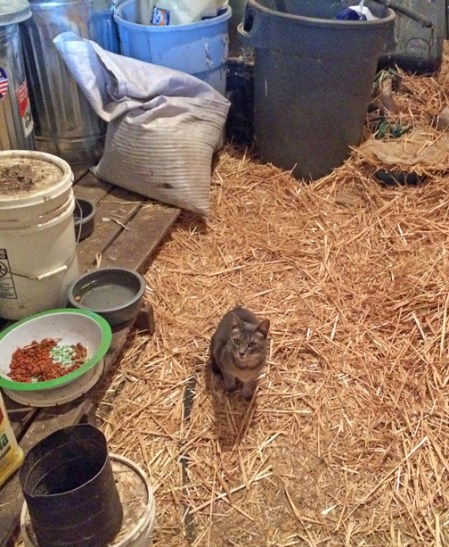
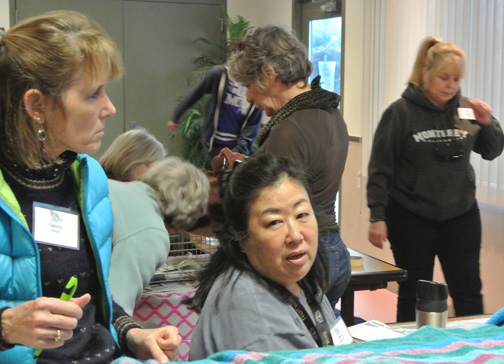
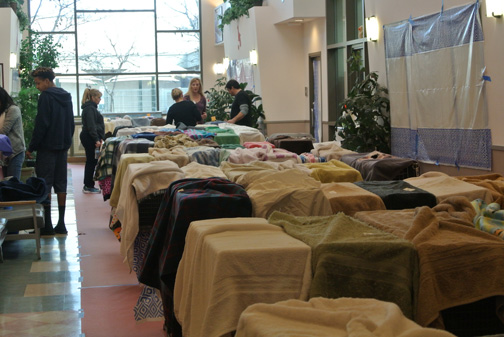
For those cats who are humanely trapped and brought to a public shelter, RTF is their ticket back home. Savannah and I are proud to be a part of this humane treatment of community cats being surrendered to our local shelter. You may view captions on the photos in the galleries by hovering over the photo. The captions may assist you in understanding how the series of photos in the gallery fit together.


OCH’s founder, Julie, has five points about RTF that answer questions and concerns some may have about this life saving program.
- A free roaming cat is trapped by a member of the public and brought to a shelter. Although the cat is perfectly healthy, she is ‘feral’ and unadoptable. Even if somewhat friendly, the shelter may have neither space nor a foster home to hold her. Traditionally, she would be euthanized, but RTF gives her another chance for life. She is spayed, ear tipped to prove she is altered, vaccinated and held only for a day or two for recovery from surgery. She then is picked up by her Feline Express™ driver to get her round trip ticket punched as she is transported back to the location from which she was trapped, and released by the driver.


- The biggest concern is getting the cat back to its original location. The shelter has the address where it was trapped, but the Feline Express™ driver must determine whether the release site is safe (traffic, opportunity for caretakers versus an empty lot, etc.).
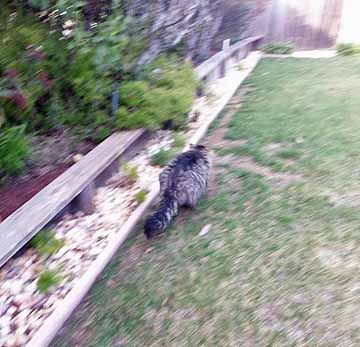
Head’in for the fence line! (see same cat above, caged, head down in box at shelter)
- The shelter veterinarian determines before surgery if the cat has a good Body Condition Score (BCS). If yes, then we know the cat is being fed somewhere, but we don’t know where for sure. More often than not, the cat lets us know if we have her in the right neighborhood. She has been quiet the whole trip, until she can smell her home neighborhood, then she begins to meow, not frightened, but eager to get home.
This 5 second video clip shows a grateful kitty—“Thanks for the lift, my house is just around this corner, paw waves!”
- RTF immediately reduces the euthanasia rate at the shelter by saving the lives of those community cats who end up there. However, the estimate is that on average, there are 3 more community cats in need of spay/neuter (TNR) for every cat who ends up in the shelter. When we release a cat, we may make a quick sweep of the neighborhood and find out if there are caretakers in need of help with TNR assistance from one of our partner rescues.


After releasing this cat, a neighbor told us about a home where about 25 community cats were being fed. One of our TNR partners will visit that neighborhood now and go door to door asking if anyone needs help with spay/neuter.
- Our goal is the safe transport and release of a cat back to its home environment. Secondarily, we leave information provided by a brochure from Alley Cat Allies, and our business card, should anyone in the neighborhood have questions or want help with humane management of the community cat population in their area.


Lastly, OCH has established a set of Golden Rules for all of us who drive for the Feline Express™—
- Do not trespass when finding a sheltered place to release the cat. Stay off personal property
- If asked, do not disclose who is trapping. Simply state the truth—the cat comes from the shelter and has been spayed/neutered, vaccinated, etc.
- Release the cat next to bushes or somewhere they can hide.
- Release the cat away from the street or parked cars (especially your own car so they do not run and hide under your car, in your engine, etc.).
- Do not force the cat out of the feral den. Wait for them to leave it on their own.
Unfortunately, some of the cats have fallen asleep and they do need a bit of a gentle reminder that they are back in their ‘hood.
Now I am curious, how many of you reading this know what a feral den is? Personally, I had no idea. And, this den is a critical component to enable the community cats to stay comfortably in shelter confinement and then Feline Express™ transport to their ‘hood.

Feral Den
OCH must purchase more feral dens as the RTF program with our shelter is beginning to take flight! OCH has a truly viable partner at Contra Costa County Animal Services under the new director. OCH released approximately 601 cats last year and predictions from shelter management are that this can increase almost threefold this year.
If you are able, I am including a link to OCH’s website where donations are greatly needed. This is an ALL volunteer cat rescue, predominately focused on RTF. I have included a short list of supplies we are in great need of as the shelter cannot fund them for us. Some of these are available on OCH’s Amazon Wish List and that link is also on their website.
- Feral dens (these cost about $85 USD)
- Painter’s tape to seal the dens during transport
- Revolution flea, mite treatment
- Snap combo test for FeLV and FIV for cats we need to relocate (the person surrendering them asked they not be returned due to safety issues)
- Pee pads for the Feline Express™ drivers’ cars as the feral dens do have two holes in the bottom for cleaning
If you are able and willing to help OCH, please leave a note if you can and tell them Savannah sent you. I would like to report back to our readers if we are able to help OCH raise funds for desperately needed supplies. They are working on grants, but those take time and the need is not going to wait.
Please, will you assist Outcast Cat Help continue to provide FREE ROUND TRIP TICKETS on the FELINE EXPRESS™
The work never stops. Check out a couple more of the cats released just this week.
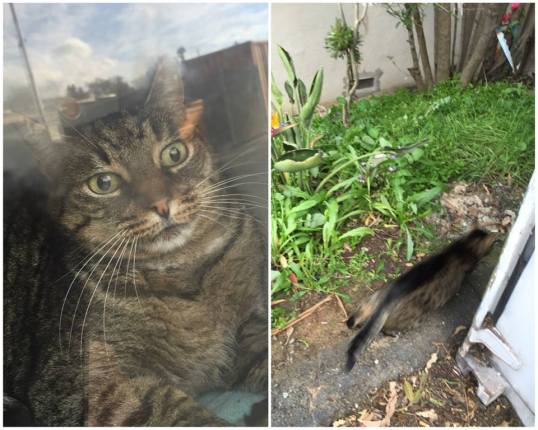
Tabby in Feral Den & then released—zooom!
And Samantha, who was on my last training ride. “Great ride! I’m home now!”
RTF is Savannah’s Paw Tracks next Paw It Forward Project for 2016. It is both a joyful, and heart wrenching, brief moment when I lift the door on the feral den and the cat dashes to freedom—sometimes stopping for a brief second and looking back as though to say “thanks.” Joyful because a life was saved—heart wrenching because I have no guarantee that the cat will be safe, cared for and never suffer—but it IS alive with great hope for a long life.
We simply must all work harder to take action, as suggested on Outcast Cat Helps’ mission—”Humanely Controlling the Cat Population™.”
Links for further information—
Million Cat Challenge sponsored by Maddie’s Fund
Best Friend’s Society research
Thank you for sticking around to read my closing appreciation for all that each and every one of you do to help humanely control our community cat population. Keep your commitment, one day at a time.


















 Savannah's Paw Tracks